

The role of HR in mergers is to act as a strategic partner from the first day of deal discussions, not after the ink dries. 65% of HR teams report feeling less than fully prepared to manage their deal portfolios, which means most organizations are already behind. With 79% of CEOs planning joint ventures or strategic alliances, the pressure on HR to lead integration, protect talent, and manage compliance has never been greater. This guide breaks down exactly what HR must do at each stage of a merger to protect deal value and keep your workforce intact.
What is the role of HR in mergers?
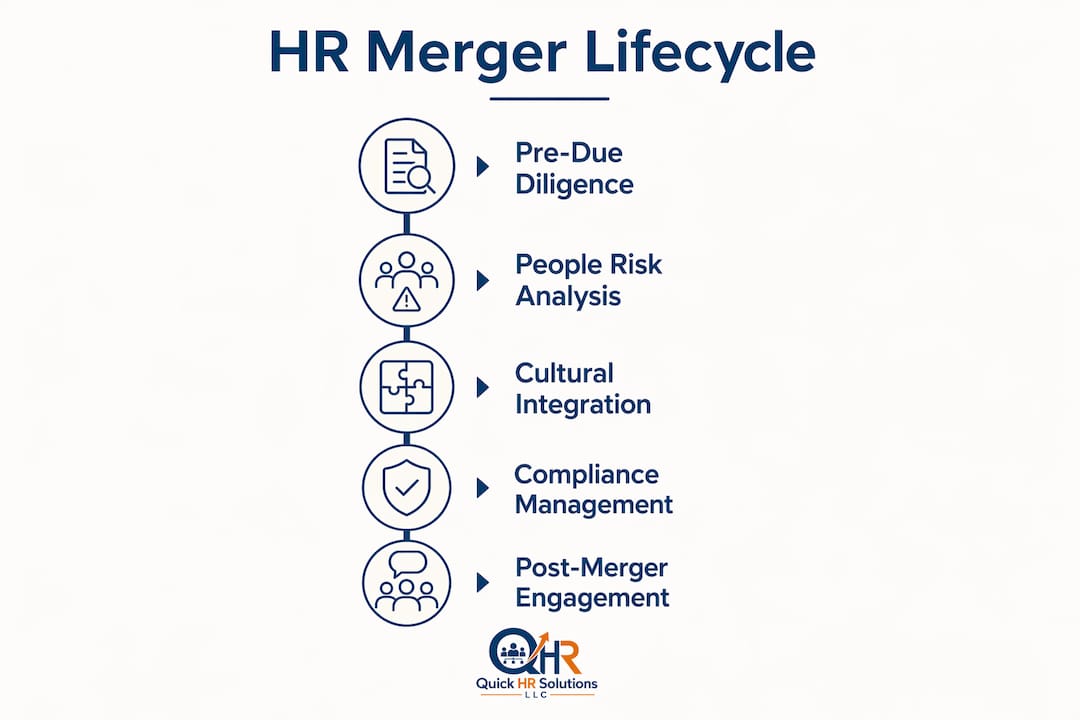
HR in a merger context is defined as the function responsible for managing people risk, cultural integration, compliance, and talent retention across the full deal lifecycle. This goes well beyond processing paperwork or updating org charts. HR must transition from an administrative service to a strategic co-owner of merger success, collaborating directly with business leaders to define an employee experience that aligns with the deal thesis.
The industry term for this function is human capital integration, and it covers everything from pre-deal due diligence to post-close culture building. When HR is excluded from early deal conversations, organizations face compounding risks: leadership misalignment, talent flight, and legal exposure. The HR business partner model is particularly effective here, because it places HR at the table with finance, legal, and operations from the start.

How does HR contribute during pre-merger due diligence?
HR's involvement before a deal closes is the single most underutilized lever in most mergers. Most deal teams focus on financial statements and technology assets. They miss the people risks that ultimately determine whether the integration succeeds or fails.
HR must assess leadership quality, organizational design, pay practices, and cultural compatibility during due diligence. This is not a soft exercise. It produces hard data on retention risk, legal exposure, and integration cost that directly affects deal valuation.
Here is what a thorough HR due diligence review covers:
- Leadership and talent risk: Identify which executives and key contributors are flight risks, and whether leadership styles between the two organizations are compatible.
- Cultural compatibility: Map values, decision-making norms, and communication styles. Organizations neglecting cultural due diligence routinely face costly culture clashes and talent losses post-merger.
- Compliance and employment agreements: Review all employment contracts, non-competes, severance obligations, and union agreements. Undisclosed liabilities here can derail a deal after closing.
- Workforce structure: Assess headcount redundancies, span of control, and reporting structures that will need to change.
- Compensation benchmarking: Compare pay equity, bonus structures, and benefits across both organizations to identify harmonization gaps.
Pro Tip: Request a full workforce data file from the target company as early as legally permitted. Analyzing tenure, compensation bands, and voluntary turnover rates tells you more about cultural health than any executive interview will.
For a deeper look at what this process involves, the Quickhrtx guide on HR due diligence walks through each step in practical terms for mid-sized businesses.
What are the key HR challenges in post-merger integration?
Post-merger integration is where most deals lose value. The financial model was sound. The strategy made sense. But the people side was managed reactively, and top performers left within the first year.
The merger integration HR role requires addressing four interconnected challenges in the first 180 days after close:
-
Talent retention beyond financial incentives. Retention bonuses buy time, not loyalty. Retention in M&A requires alignment, transparent communication, and frontline manager clarity to maintain productivity. Employees stay when they understand their role, their future, and who they report to.
-
Leadership visibility and engagement. Leadership silence post-merger directly contributes to talent disengagement and slows integration, with measurable negative impact on EBITDA improvements. Leaders must be present, accessible, and consistent in their messaging throughout the integration period.
-
Cultural integration and employee experience design. Culture does not merge automatically. HR must design deliberate touchpoints: town halls, cross-functional team projects, and shared rituals that build a new identity without erasing what made each organization effective.
-
Role clarity and reporting structure communication. Ambiguity about who reports to whom, who owns which decisions, and what the new org chart looks like creates anxiety that accelerates attrition. HR must publish clear organizational structures and update them in real time as decisions are made.
Pro Tip: Assign integration managers at the department level, not just at the executive level. Mid-level managers are the primary culture translators. If they are confused or disengaged, their teams will be too.
How can HR strategies mitigate compliance and legal risks?
Compliance failures in mergers are expensive and entirely preventable. The most common mistakes involve verbal assurances that were never documented, service time that was not recognized in asset deals, and notification requirements that were missed.
HR best practices in mergers require a structured legal risk checklist:
- Document everything in writing. Proper documentation of employment terms and retention bonuses prevents litigation and protects both parties in asset-based transactions. Verbal commitments made during deal negotiations are not enforceable.
- Address service time recognition explicitly. In asset deals, employees are technically rehired. Their original start date and accrued benefits do not automatically transfer. Offer letters must state clearly whether prior service counts toward PTO accrual, vesting schedules, and severance calculations.
- Comply with WARN Act requirements. If the merger results in layoffs or plant closings affecting 50 or more employees, the federal WARN Act requires 60 days advance notice. Missing this deadline triggers significant liability.
- Handle union and employee consultation obligations. If either organization has a collective bargaining agreement, HR must engage union representatives before implementing changes to wages, hours, or working conditions.
- Train managers on consistent messaging. Inconsistent statements from managers about job security, compensation changes, or benefit modifications create legal exposure and destroy trust simultaneously.
The following table compares the two most common deal structures and their HR compliance implications:
| Deal Type | Key HR Compliance Consideration |
|---|---|
| Stock Purchase | Existing employment contracts, benefits, and liabilities transfer automatically to the buyer |
| Asset Purchase | Employees are technically terminated and rehired; service time and benefits must be explicitly addressed in new offer letters |
For a broader view of managing HR legal exposure, the Quickhrtx resource on HR risk management covers the frameworks that apply across deal types.
What HR practices sustain engagement after a merger?
Employee engagement after a merger does not happen by default. It requires a deliberate strategy that HR owns and executes over a 12–24 month horizon, not just the first 90 days.
The concept of re-recruiting is one of the most effective and underused tools in post-merger HR strategy. Transaction leaders often prioritize financial fit over cultural fit, which means HR must proactively rebuild employee commitment to the new organization. Re-recruiting means treating existing employees with the same intentionality you would apply to attracting a new hire: understanding their motivations, addressing their concerns, and showing them a compelling future.
Specific practices that sustain engagement include:
- Employee listening programs: Pulse surveys, focus groups, and anonymous feedback channels give HR real data on where trust is eroding before it becomes attrition.
- Guiding experience principles: Define 3–5 principles that describe how employees should feel during the integration. These principles anchor every HR decision, from how town halls are run to how performance reviews are structured.
- Manager enablement: Mid-level managers need scripts, FAQs, and coaching support. They face the hardest questions from their teams and often have the least information. HR must close that gap.
- Milestone recognition: Celebrate integration wins publicly. Recognizing teams that successfully merged processes or hit shared goals reinforces the narrative that the merger is working.
The table below shows how engagement metrics shift when HR takes a proactive versus reactive approach:
| Engagement Driver | Proactive HR Approach | Reactive HR Approach |
|---|---|---|
| Role clarity | Published org charts within 30 days of close | Org charts released after questions escalate |
| Manager support | Integration playbooks and coaching provided | Managers left to interpret changes independently |
| Employee feedback | Pulse surveys every 30 days | Annual engagement survey only |
| Leadership visibility | Scheduled town halls and skip-level meetings | Ad hoc communication when issues arise |
Effective HR engagement throughout the deal lifecycle leads to stronger integration success, accelerated synergy realization, and sustained growth. That outcome does not happen without a structured HR strategy behind it.
Key takeaways
The role of HR in mergers determines whether a deal creates or destroys value, and it starts long before the deal closes.
| Point | Details |
|---|---|
| Start HR involvement early | Engage HR during due diligence to identify leadership, culture, and compliance risks before deal close. |
| Document all employment terms | Written agreements on service time, retention bonuses, and benefits prevent post-merger litigation. |
| Go beyond financial retention | Role clarity and manager communication retain talent more reliably than bonuses alone. |
| Design culture deliberately | Re-recruit employees and use guiding experience principles to build a unified post-merger identity. |
| Measure engagement continuously | Pulse surveys and manager enablement programs catch disengagement before it becomes attrition. |
Where most merger HR strategies break down
I have seen the same mistake repeated across deals of every size: HR gets called in after the term sheet is signed, handed a list of integration tasks, and expected to fix in 90 days what should have been planned over six months. The result is predictable. Key people leave. Culture clashes surface in client-facing teams. Compliance gaps become lawsuits.
The uncomfortable truth is that most deal teams still treat HR as a support function rather than a deal function. Finance models the synergies. Legal structures the transaction. HR is handed the org chart and told to make it work. That sequencing is backwards.
What actually works is placing an HR leader on the deal team before the letter of intent is signed. That person's job is not to slow down the deal. It is to surface the people risks that will determine whether the projected synergies ever materialize. A $50 million acquisition that loses its top three revenue producers in year one is not a $50 million acquisition anymore.
I also want to push back on the over-reliance on retention bonuses. They are a short-term tool that signals to employees that the organization knows they might leave. The better signal is clarity: clear roles, clear leadership, clear answers to the questions employees are already asking. Managers must have absolute clarity on roles and authority to maintain engagement and productivity post-merger. That clarity is an HR deliverable, and it requires planning, not just good intentions.
If you are a business leader reading this, the most valuable thing you can do right now is ask your HR team whether they have a seat at the deal table. If the answer is no, that is the first problem to solve.
— John
How Quickhrtx supports HR leadership during mergers
Mergers demand HR expertise that most mid-sized companies do not have on staff full time. Quickhrtx provides fractional HR consulting for businesses in Dallas-Fort Worth and across Texas, giving you senior HR leadership exactly when you need it without the cost of a full-time executive hire.
Whether you are preparing for due diligence, managing post-close integration, or trying to retain key talent through a period of change, Quickhrtx brings SHRM-certified expertise to your deal team. From compliance documentation to culture strategy, the work gets done with the rigor your transaction requires. If you are navigating a merger and need fractional HR leadership in Dallas or the surrounding area, book a free consultation to discuss your specific situation.
FAQ
What is the role of HR in a merger?
HR manages people risk, cultural integration, talent retention, and compliance across the full merger lifecycle. The function acts as a strategic partner to business leaders, not just an administrative support team.
When should HR get involved in a merger?
HR should be involved before the letter of intent is signed. Early involvement allows HR to assess leadership alignment, cultural compatibility, and legal exposure during due diligence, which directly affects deal valuation and integration planning.
How does HR support talent retention during a merger?
HR supports retention through role clarity, transparent communication, and manager enablement. Short-term bonuses are insufficient on their own; employees stay when they understand their future and trust their leadership.
What compliance risks does HR manage in a merger?
HR manages WARN Act notifications, employment contract transfers, service time recognition in asset deals, union consultation requirements, and benefits harmonization. Undocumented verbal commitments are among the most common sources of post-merger litigation.
How does HR measure integration success after a merger?
HR tracks integration success through pulse survey results, voluntary turnover rates, time-to-fill for open roles, and manager effectiveness scores. These metrics signal whether cultural integration is progressing or whether intervention is needed.