

HR's role in ADA compliance is to serve as the central authority managing accommodation requests, coordinating the interactive process, and maintaining the documentation that protects both employees and the organization. The Americans with Disabilities Act sets binding obligations for any employer with 15 or more employees, and HR is the function responsible for translating those obligations into daily practice. For Texas businesses, where workforce diversity and rapid growth create constant compliance pressure, getting this right is not optional. The EEOC enforces ADA standards aggressively, and the Department of Justice has updated its guidance on accessibility and effective communication as recently as 2026. HR professionals who understand their specific responsibilities under the ADA protect their organizations from costly litigation and build workplaces where every employee can contribute fully.
What is the ADA interactive process and how must HR manage it?
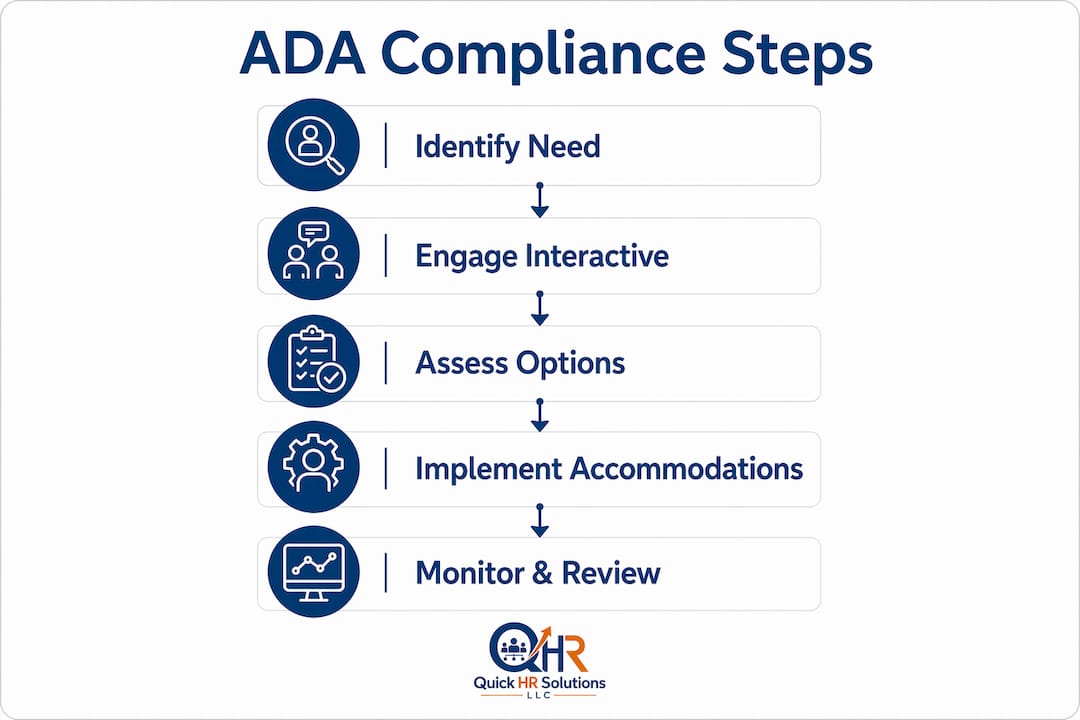
The interactive process is the mandatory, collaborative dialogue between HR, the employee, and the employee's supervisor that forms the legal backbone of ADA accommodation. HR initiates and manages this process. The conversation must happen promptly once HR learns of a disability-related issue, and it must be documented at every step.
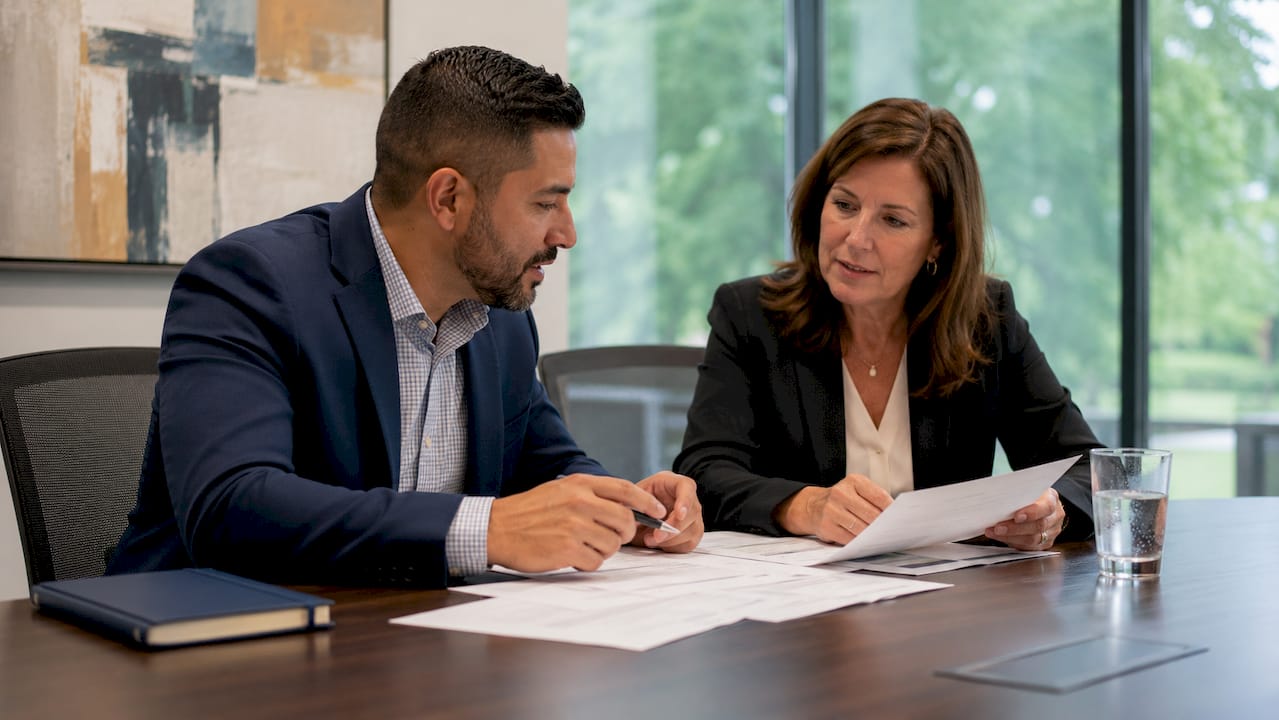
A critical point that many Texas employers miss: the interactive process begins as soon as an employer learns of a health-related performance issue, not when an employee submits a formal request. No magic words are required. A doctor's note, a manager's observation, or an employee's offhand comment about difficulty performing a task all trigger HR's obligation to engage. Waiting for a formal ADA request creates a compliance gap that the EEOC treats as a violation.
HR's documentation responsibilities during the interactive process include:
- Date of initial notice: Record when HR first learned of the potential disability-related need.
- Options discussed: Log every accommodation option raised, including those the employee declined.
- Medical information reviewed: Note what documentation was requested and received, without recording specific diagnoses in personnel files.
- Decisions and reasoning: Document why each accommodation was approved, modified, or denied.
- Follow-up dates: Record check-ins to assess whether the accommodation remains effective.
The interactive process requires documentation that includes dates, discussed options, and the reasoning behind each decision. That paper trail is HR's strongest legal defense if a complaint reaches the EEOC or a federal court.
Accommodations are not always permanent. An employee's condition may change, a job may evolve, or an initial accommodation may prove ineffective. HR must treat the interactive process as an ongoing cycle, not a one-time event. Revisiting accommodations regularly, and documenting those revisits, keeps the organization compliant as circumstances shift.
Pro Tip: Train every supervisor to recognize the early signals of an accommodation need, such as increased absences, declining performance, or a mention of a medical condition, and require them to notify HR within 24 hours. Prompt manager escalation reduces the risk of a delayed interactive process claim.
How does HR assess and implement reasonable accommodations?
Accommodation cost is the most common reason employers resist ADA requests. The data does not support that resistance. Most accommodations cost under $500 net, after accounting for available tax credits and funding sources. That figure reframes the undue hardship analysis entirely. HR must calculate net cost, not gross cost, when evaluating whether an accommodation creates a genuine financial burden.
The IRS Disabled Access Credit allows eligible small businesses to claim a tax credit for accommodation expenses. HR professionals should factor this credit into every undue hardship analysis before concluding that an accommodation is financially prohibitive. Ignoring available tax relief and then denying an accommodation on cost grounds is a legally vulnerable position.
Common accommodation types and their typical cost profiles:
| Accommodation type | Typical net cost | Notes |
|---|---|---|
| Schedule modification | $0 | Shift or hours adjustment with no equipment cost |
| Remote work arrangement | Low | Existing technology often sufficient |
| Assistive technology | Varies | Screen readers, voice software; tax credits apply |
| Physical workspace modification | Low to moderate | Ergonomic equipment, ramp additions |
| Policy modification | $0 | Written policy change with no physical cost |
HR must also maintain current, written job descriptions that clearly separate essential functions from marginal duties. Accurate job descriptions are prerequisites for legally defensible accommodation decisions. An employer who denies an accommodation based on an essential function that is not clearly documented in writing faces a serious litigation risk. The job description is the foundation of the undue hardship argument.
Pro Tip: Review all job descriptions annually and flag any role where essential functions have changed due to technology, restructuring, or remote work shifts. Outdated descriptions are one of the most common and avoidable sources of ADA exposure for Texas employers.
What distinct roles do HR and managers play in ADA compliance?
HR and managers share ADA compliance responsibilities, but their roles are not interchangeable. Confusing the two creates gaps that lead to litigation.
HR acts as the compliance architect and administrative lead. HR owns the interactive process, analyzes medical information, determines whether an accommodation is reasonable, assesses undue hardship, and ensures the organization's response aligns with federal and Texas state law. HR also maintains all accommodation records and coordinates with legal counsel when a request is complex or contested.
Managers serve as frontline identifiers and operational partners. Their responsibilities include:
- Recognizing early signals: Noticing performance changes, attendance patterns, or employee statements that suggest a disability-related need.
- Escalating promptly to HR: Reporting potential accommodation needs without attempting to resolve them independently.
- Implementing approved accommodations: Adjusting schedules, modifying workflows, or arranging workspace changes as directed by HR.
- Avoiding unauthorized decisions: Never denying or granting accommodations without HR involvement, since both actions create legal risk.
The training each group receives must reflect these different responsibilities. HR professionals need deep knowledge of EEOC guidance, the interactive process mechanics, undue hardship analysis, and documentation standards. Managers need practical skills: how to recognize a potential accommodation need, what to say to an employee, and how to escalate correctly. Clear role differentiation between HR as administrative lead and managers as operational partners is the foundation of effective ADA compliance. Blurring that line, even with good intentions, produces inconsistent decisions and legal exposure.
HR's legal role also extends to monitoring compliance with both federal ADA standards and any Texas-specific employment laws that apply to the organization. Reviewing HR compliance risks in Texas annually helps HR teams stay current as regulations evolve.
How does HR ensure accessibility and effective communication under ADA?
ADA compliance extends beyond individual accommodation requests. HR is responsible for ensuring the entire workplace, physical and digital, meets accessibility standards and that all employees can communicate effectively with the organization.
The Department of Justice issued updated guidance in 2026 confirming that businesses must proactively address barriers and provide auxiliary aids to guarantee effective communication. HR translates that obligation into policy. The following steps define HR's accessibility responsibilities:
- Audit physical spaces. Identify barriers in entrances, restrooms, meeting rooms, and workstations. Coordinate with facilities to address issues that meet the "readily achievable" standard under ADA Title III.
- Assess digital accessibility. Review the company intranet, HR portals, training platforms, and job application systems for compliance with Web Content Accessibility Guidelines (WCAG). Digital barriers are increasingly a focus of EEOC enforcement.
- Provide auxiliary communication aids. When an employee or applicant requires sign language interpretation, captioning, or written materials in alternative formats, HR arranges those services. Auxiliary aids like sign language interpreters are a legal requirement, not a courtesy.
- Modify policies that create barriers. A policy that requires all employees to attend in-person meetings may exclude an employee who uses a wheelchair and cannot access the meeting room. HR reviews policies for unintended exclusion and revises them accordingly.
- Document accessibility decisions. Record what barriers were identified, what actions were taken, and the timeline for resolution. This documentation supports the organization's defense if an accessibility complaint is filed.
ADA Title III requires businesses to make reasonable modifications in policies and procedures and to provide auxiliary communication aids, balancing access against the "readily achievable" financial standard. HR applies that standard by assessing both the cost of the modification and the organization's overall financial capacity.
Key Takeaways
HR's role in ADA compliance is to own the interactive process, assess accommodations accurately, and maintain the documentation that makes every decision legally defensible.
| Point | Details |
|---|---|
| Interactive process starts early | HR must engage as soon as a disability-related issue surfaces, not when a formal request arrives. |
| Most accommodations are affordable | Net accommodation costs typically fall under $500 after tax credits, making undue hardship claims rare. |
| HR and managers have distinct roles | HR leads compliance decisions; managers identify needs and implement approved accommodations. |
| Documentation is the legal defense | Every step of the interactive process must be recorded with dates, options discussed, and reasoning. |
| Accessibility covers digital and physical | HR must audit both physical spaces and digital platforms to meet ADA and DOJ standards. |
What I've learned about ADA compliance after years of working with Texas businesses
The interactive process is where most Texas employers stumble, and the reason is almost always the same: they treat it as a form to complete rather than a conversation to sustain. I have seen organizations with polished accommodation request forms and zero follow-up documentation. That combination is exactly what the EEOC looks for when investigating complaints.
The detail that surprises most HR professionals I work with is how early the obligation begins. The interactive process begins immediately upon notice of a disability-related impact, even when that notice is informal or indirect. A supervisor who hears an employee mention a chronic condition and does nothing has already created a compliance gap. Building the habit of prompt escalation, and documenting it every time, is the single most protective practice an HR team can adopt.
The role distinction between HR and managers matters more than most organizations realize. When managers try to resolve accommodation requests on their own, they make inconsistent decisions that expose the company to claims of disparate treatment. When HR fails to train managers on what to escalate, the interactive process never starts. Both failures are preventable with clear protocols and regular training. The value of thorough HR documentation cannot be overstated. It is the difference between a complaint that gets resolved quickly and one that becomes a federal lawsuit.
My honest observation after working with businesses across the Dallas-Fort Worth area is this: ADA compliance is not complicated when the roles are clear, the documentation is consistent, and the interactive process is treated as a living practice. The organizations that struggle are the ones that handle accommodation requests reactively, one at a time, with no system behind them.
— John
How Quickhrtx supports Texas businesses with ADA compliance
ADA compliance requires consistent processes, clear documentation, and trained people at every level of the organization. Quickhrtx provides fractional HR consulting built specifically for small and mid-sized Texas businesses that need that expertise without the cost of a full internal HR department.
Quickhrtx's SHRM-certified consultants help Texas employers build the interactive process frameworks, job description libraries, and training programs that make ADA compliance manageable and defensible. From Dallas-Fort Worth to surrounding areas, Quickhrtx works alongside your leadership team to develop ADA-ready HR policies and deliver the documentation practices that protect your organization. For businesses in the Dallas area, the fractional HR services in Dallas include hands-on compliance support tailored to your industry and workforce size. Book a free consultation to see how Quickhrtx can put the right processes in place for your team.
FAQ
What triggers the ADA interactive process?
The interactive process begins as soon as HR or a manager learns of a health-related performance issue, even without a formal accommodation request or any mention of the ADA. Triggers include doctor's notes, manager observations, and employee remarks about difficulty performing job duties.
How much do reasonable accommodations typically cost?
Most reasonable accommodations have a net cost under $500 after applicable tax credits and funding sources are applied. Financial hardship is rarely a valid legal defense for refusing an accommodation.
What is HR's primary responsibility in ADA compliance?
HR serves as the central coordinator of the ADA interactive process, managing documentation, analyzing accommodation requests, assessing undue hardship, and ensuring decisions align with EEOC standards and federal law.
How should HR handle digital accessibility under ADA?
HR must audit company digital platforms, including HR portals, training systems, and job application tools, for compliance with accessibility standards. The Department of Justice's 2026 guidance confirms that digital barriers carry the same legal weight as physical ones.
What is the difference between HR and manager ADA responsibilities?
HR owns the compliance decisions, documentation, and undue hardship analysis. Managers identify potential accommodation needs and implement approved solutions. Managers should never grant or deny accommodations without HR involvement.