

HR compliance isn't a stack of paperwork you revisit once a year. For small to mid-sized businesses in Texas, understanding what is HR compliance means recognizing it as the daily operational practice of staying aligned with federal and state employment laws across every stage of the employee lifecycle. Get it wrong and you're looking at back wages, lawsuits, and fines that can cripple a growing business. Get it right and you have a workplace where people are treated fairly, managers make sound decisions, and your business is protected from the inside out.
Table of Contents
- Key takeaways
- What HR compliance means for Texas businesses
- Types of HR compliance audits and why they matter
- Why compliance training is more than a checkbox
- Embedding compliance into daily operations
- My honest take on compliance for Texas SMBs
- How Quickhrtx helps Texas businesses stay compliant
- FAQ
Key takeaways
| Point | Details |
|---|---|
| HR compliance spans the full lifecycle | It covers hiring, classification, compensation, leave, and termination, not just onboarding paperwork. |
| Texas has unique compliance rules | State-specific laws like the Texas Payday Law and optional workers' compensation require tailored strategies. |
| Audits catch problems before regulators do | Regular human resource compliance audits help identify gaps in I-9 records, wage practices, and EEO postings. |
| Training builds culture, not just awareness | Compliance training reduces legal risk and shapes how employees and managers treat one another every day. |
| Documentation is your first line of defense | Standardized job descriptions, offer letters, and investigation records protect you if a dispute arises. |
What HR compliance means for Texas businesses
HR compliance is the process of aligning your company's employment practices with applicable federal, state, and local laws. That covers the full employment lifecycle: recruitment, worker classification, compensation, leave administration, accommodation, discipline, and termination. It's not a single policy or a one-time checklist. It's an ongoing operating standard.
For Texas employers, the list of governing laws is longer than most business owners expect.
Federal laws you need to know:
- Fair Labor Standards Act (FLSA): Sets minimum wage, overtime eligibility, and child labor standards. The DOL recovered $274 million in back wages from FLSA violations in FY 2022 alone.
- Title VII of the Civil Rights Act: Prohibits employment discrimination based on race, color, religion, sex, and national origin.
- Americans with Disabilities Act (ADA): Requires reasonable accommodations for qualified employees with disabilities.
- Family and Medical Leave Act (FMLA): Entitles eligible employees to 12 weeks of unpaid, job-protected leave per year.
- OSHA: Requires a safe work environment and specific recordkeeping for workplace injuries.
Texas-specific rules that often catch businesses off guard:
- Texas Payday Law: Governs when and how wages must be paid. For involuntary termination, final pay is due within six days.
- Texas Commission on Human Rights Act (TCHRA): Mirrors many federal anti-discrimination protections but applies to employers with 15 or more employees.
- New hire reporting: Texas employers must report new hires within 20 calendar days, with penalties for noncompliance.
- Workers' compensation: Texas is one of the few states where private employers can opt out. But opting out exposes you to direct lawsuits from injured employees without the traditional liability limits.
Here's a quick comparison of federal versus Texas-specific requirements to help you see where the gaps often appear:
| Compliance Area | Federal Requirement | Texas-Specific Rule |
|---|---|---|
| Final paycheck | Next regular payday | Within 6 days of involuntary termination |
| Anti-discrimination | Title VII, ADA, ADEA | TCHRA (15+ employees) |
| Workers' compensation | Not federally mandated | Optional, but opt-out carries significant legal exposure |
| New hire reporting | Within 20 days | Within 20 calendar days to Texas New Hire Reporting |
| Minimum wage | $7.25/hr federal | $7.25/hr, no state increase above federal |
Understanding your compliance obligations at both levels is not optional. It is how you keep your business off a regulator's radar.
Types of HR compliance audits and why they matter
A human resource compliance audit is a structured review of your employment practices against applicable laws and internal policies. It's different from a general HR audit, which might evaluate things like turnover rates or engagement scores. A compliance audit is specifically focused on legal adherence.
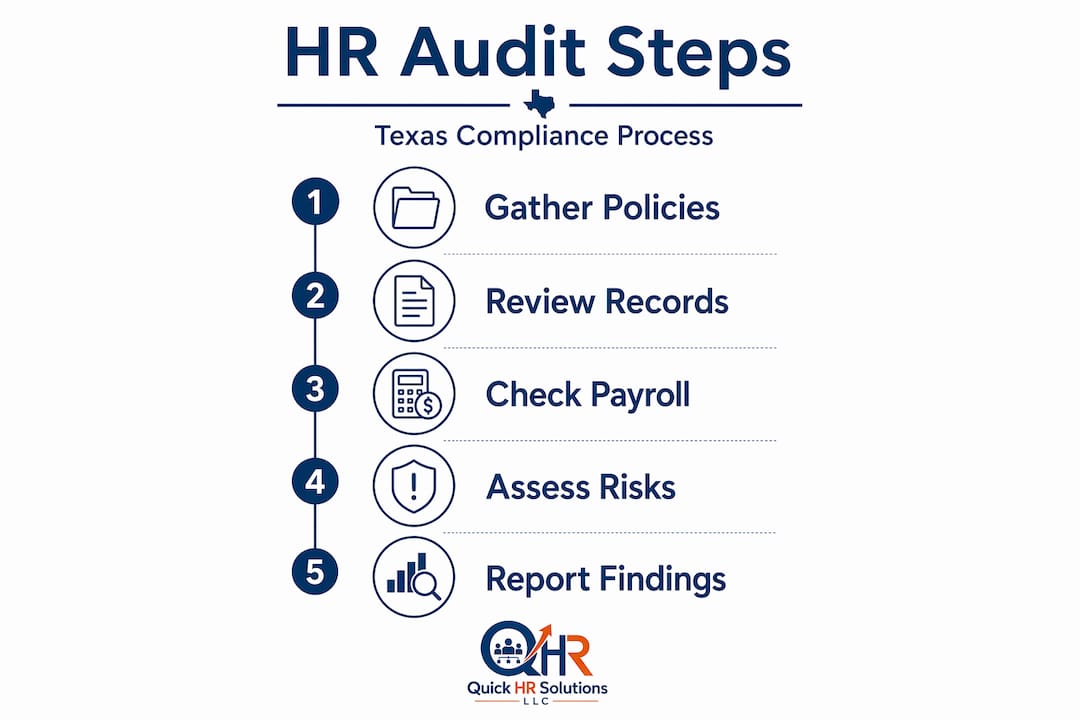
Formal audits use documented frameworks and, ideally, involve independent reviewers who can spot what internal teams miss. The result is auditable evidence you can present to a regulator or use in your own defense.
The most common focus areas for Texas SMBs include:
- I-9 verification: Are employment eligibility forms complete, timely, and stored correctly? This is one of the most common violations found during federal worksite enforcement actions.
- Wage and hour compliance: Are non-exempt employees classified correctly? Are short breaks being paid? Misclassification and break pay errors are among the most frequent causes of wage disputes.
- EEO postings: Federal and state required workplace postings must be current and visible. EEOC posting violations carry fines of up to $612 per violation.
- OSHA recordkeeping: Injury and illness logs must be accurate and available to employees upon request.
- Policy review: Employee handbooks and HR policies should reflect current law, not the version from five years ago.
HR audits uncover blind spots that cause compliance, financial, and reputational risk. The key insight is that a single annual review is rarely enough. High-risk areas like I-9 verification and FLSA classifications deserve regular focused reviews, not just a yearly glance.
Pro Tip: Schedule a focused mini-audit on a different compliance area each quarter rather than trying to cover everything at once annually. This gives you deeper coverage without overwhelming your team.
If you want to understand how compliance connects to broader risk, the Quickhrtx guide on HR risk management offers a practical framework for Texas businesses.
Why compliance training is more than a checkbox
Ask most employees about compliance training and you'll hear: "The annual video I have to click through." That's the wrong approach, and it's also a liability.
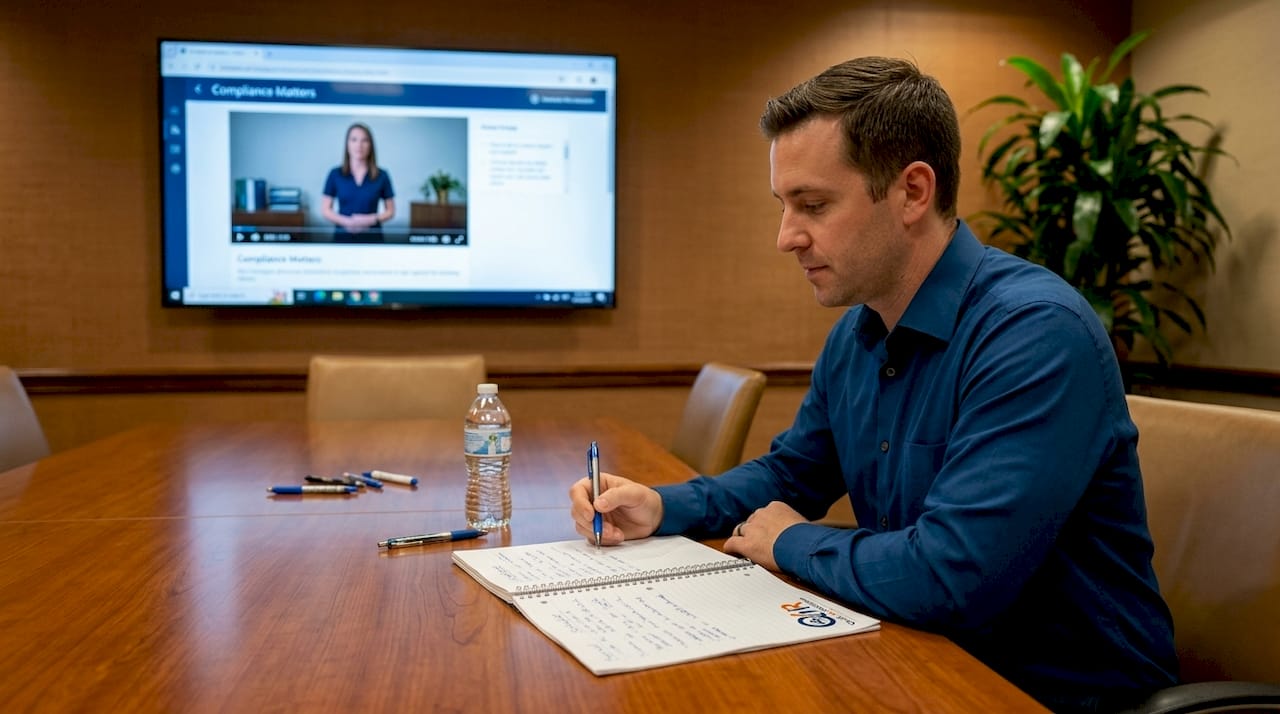
Compliance training protects from legal exposure, reinforces policy, and builds the kind of organizational trust that keeps problems from escalating into lawsuits. When a manager understands harassment law not just as a rule but as a standard for how people are treated, the culture shifts. That shift has real dollar value.
Why leaders specifically need HR compliance training goes beyond awareness. HR compliance is organizational literacy at every level. Supervisors and project leads make decisions every day that carry compliance weight: how they document performance issues, how they handle leave requests, how they respond to accommodation needs. If they don't understand the rules, a single poorly worded email can trigger a lawsuit.
Effective compliance training for Texas businesses should cover:
- Workplace harassment and discrimination: Both federal and TCHRA-level protections, with scenario-based examples that reflect real workplace situations.
- Wage and hour rules: Managers need to understand overtime eligibility, meal breaks, and what counts as compensable time.
- Safety obligations: OSHA basics and Texas-specific workplace safety rules.
- Leave laws: FMLA eligibility, intermittent leave, and how to handle requests without triggering retaliation claims.
HR leaders should partner with compliance and legal teams to keep training current and engaging. Static slide decks from 2019 will not cut it. Training needs to be updated whenever laws change and needs to use formats that actually engage adult learners: scenario-based exercises, interactive case studies, and small group discussions.
Pro Tip: Build a short monthly "compliance moment" into team meetings. A two-minute recap of one policy or scenario keeps compliance top of mind without the heaviness of a formal training session.
Embedding compliance into daily operations
Compliance is not a project. It's a standard. Here's how Texas SMBs can make it operational rather than reactive.
-
Standardize your hiring documents. Structured job descriptions, consistent interview guides, and templated offer letters reduce both bias and legal exposure. Standardizing these processes reduces HR compliance risks at the very first stage of employment.
-
Document everything that matters. Leave requests, accommodation discussions, performance conversations, and workplace investigations all need to be in writing. If a dispute arises, documentation is your defense. The Quickhrtx guide on HR investigations walks through exactly what Texas businesses should be capturing and why.
-
Use an HRIS or compliance tracking tool. Manual tracking of training completions, I-9 expiration dates, and leave balances is how things fall through the cracks. A basic HRIS centralizes records and sends alerts before deadlines pass.
-
Build your HR compliance calendar. A compliance calendar tracks filing deadlines, required training cycles, policy review dates, and posting updates throughout the year. What does an HR compliance calendar mean in practice? It means you never miss an EEO-1 filing, a Texas new hire reporting deadline, or an annual policy update because it was already on your schedule months in advance.
-
Stay current with legal changes. Texas employment law does not stand still. Subscribe to updates from the Texas Workforce Commission and federal agency newsletters. When a regulation changes, your policies need to change with it, not six months later.
Pro Tip: Designate one person on your team as the "compliance point of contact." They don't need to be a lawyer. They just need to own the calendar, flag changes, and keep documentation organized. In small businesses, this single accountability shift prevents most compliance failures.
If you're unsure whether your current setup is keeping pace, Quickhrtx has a straightforward resource on when to hire a consultant that outlines the signals most businesses ignore until it's too late.
My honest take on compliance for Texas SMBs
I've worked with a lot of small and mid-sized businesses in Texas, and the pattern I see most often is this: compliance gets treated as an afterthought until something goes wrong. A lawsuit, a DOL inquiry, an EEOC charge. Then suddenly everyone wants to build the infrastructure that should have been there from day one.
What I've learned is that compliance done right is actually a competitive advantage. When your hiring process is structured and documented, you attract better candidates and defend against bias claims. When your managers are trained, you have fewer employee relations crises to manage. When your policies are current, you spend less time firefighting and more time growing.
The businesses that struggle most are usually the ones where HR compliance lives only in the HR department. I've seen companies where supervisors were making decisions about leave and overtime with zero understanding of the rules, creating liability that HR then had to clean up. The fix isn't more paperwork. It's making compliance a shared organizational responsibility.
Texas has a unique regulatory environment. The opt-out on workers' compensation alone sets you apart from almost every other state, and many business owners don't realize what that exposure looks like until they're in a lawsuit. The combination of federal law, Texas Payday Law, and TCHRA means you're managing multiple overlapping systems.
My honest advice: stop thinking about compliance as the minimum you have to do. Start thinking about it as the floor you build everything else on.
— John
How Quickhrtx helps Texas businesses stay compliant
Running a growing business in Texas means dealing with employment laws that change, employees with complex needs, and compliance requirements that span multiple jurisdictions. Most small to mid-sized businesses don't need a full-time HR department. They need experienced guidance exactly when and where it's required.
Quickhrtx provides fractional HR consulting in Dallas and across the DFW area, giving Texas SMBs direct access to SHRM-certified HR professionals who specialize in compliance, audits, training design, and employment documentation. Whether you need a compliance audit, a policy refresh, or ongoing HR support without the overhead of a full-time hire, Quickhrtx builds the solution around your specific situation. You get the expertise of a seasoned HR team at a fraction of the cost. Book a free consultation at quickhrtx.com and find out exactly where your compliance gaps are before a regulator does.
FAQ
What is HR compliance in simple terms?
HR compliance means running your employment practices in line with applicable federal, state, and local laws across every stage of the employee relationship, from hiring through termination. It protects both your employees and your business from legal and financial risk.
What are the most common types of HR compliance audits?
The most common types include I-9 audits, wage and hour reviews, EEO posting checks, OSHA recordkeeping audits, and policy compliance reviews. Each targets a specific area of legal risk and should be conducted regularly, not just annually.
Why does HR compliance matter more in Texas than other states?
Texas has several unique rules, including a six-day final paycheck requirement for involuntary terminations, optional workers' compensation coverage that carries significant liability if not carried, and new hire reporting deadlines with financial penalties. These state-specific rules require compliance strategies tailored to Texas, not just federal defaults.
How often should a small business conduct an HR compliance audit?
Most Texas SMBs benefit from quarterly mini-audits focused on high-risk areas like I-9 verification and wage classifications, combined with a comprehensive annual review. Waiting for a full annual audit means problems can compound for months before you catch them.
What does an HR compliance calendar mean for day-to-day operations?
An HR compliance calendar is a scheduled system for tracking filing deadlines, required training cycles, posting update dates, and policy review periods throughout the year. It turns compliance from a reactive scramble into a planned, manageable process.